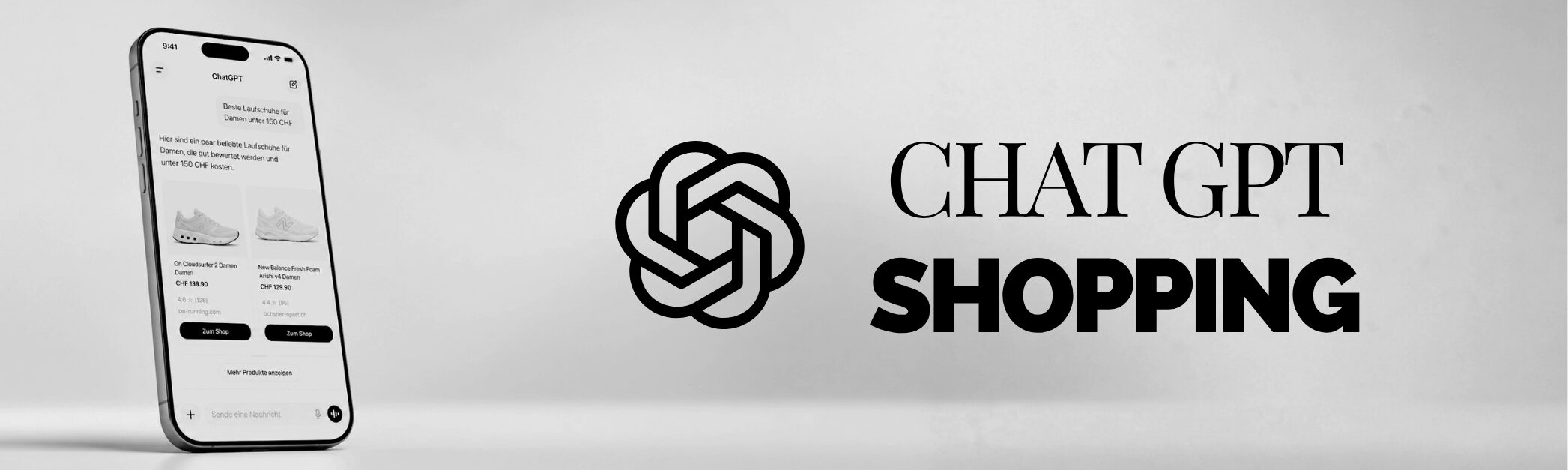
ChatGPT Shopping expands the well-known AI assistant’s feature set with an integrated product search. For matching queries, items now appear directly in the chat, complete with images, prices, key data and shop links. For retailers, this creates an additional sales channel in which up-to-date product information above all determines visibility.
A successful ChatGPT shopping optimization therefore doesn’t start with promotional wording, but with the quality of your product data. Product feed, structured schema markup and clear product pages all need to deliver consistent, complete and current information. This article covers which data sources matter for ChatGPT Commerce and which feed fields carry the most weight. It also covers how to prepare your product information, both technically and editorially, for AI commerce.
What is ChatGPT Shopping?
ChatGPT Shopping refers to product search within ChatGPT. As soon as the system detects purchase intent, it classifies the query and displays matching offers as visual product cards. Depending on the data available, title, image, price, retailer, features, reviews and a link to the product page can all appear. Organic placement depends in particular on contextual relevance and product information. This is explicitly not a paid advertising format. Shopping and ChatGPT Ads are kept separate.
Technically, ChatGPT first identifies what’s being searched for, then matches the query against current product data. The language model interprets, for example, whether someone needs a lightweight hiking boot for wide feet or an energy-efficient fridge for a small kitchen. It then draws on product information from the catalogs or feeds provided, as well as from relevant e-commerce pages. The answer therefore goes beyond the model’s stored knowledge.
For the Swiss market, timing matters: as of July 2026, OpenAI’s actual shopping product search is officially live only in the US. No rollout date for Switzerland has been announced yet. Even so, early preparation is worthwhile, since OpenAI has announced further regions. There are already reach arguments worth taking seriously: OpenAI itself points to millions of integrated Shopify merchants and several large retail businesses within the Agentic Commerce Protocol.
Where does ChatGPT Shopping get its product data?
Several data sources matter for ChatGPT shopping optimization. The central resources include:
- Product feeds that retailers provide via the Agentic Commerce Protocol
- Catalog integrations from platforms such as Shopify and Etsy
- Connected feed providers and commerce systems
- Product pages that ChatGPT can capture via the OAI-SearchBot
- Structured data, product copy, images and visible offer details on the site itself
Many online stores already manage a large share of this information in Google Merchant Center. That’s why the Google Merchant Center feed stored there also plays a role in preparing for AI commerce. Automatic adoption by OpenAI isn’t confirmed. Still, the fields largely overlap with the requirements of an AI shopping product feed: title, description, product link, image, price, availability, brand and unique item identifiers. Existing Google feeds can therefore serve as a starting point and be adapted for further commerce interfaces.
How can products be prepared for ChatGPT Commerce?
Good visibility comes from clear, consistent data. ChatGPT Commerce needs to reliably recognize a product, match it to a query, and connect it to a current offer. The following areas form the technical and editorial foundation.
Putting the product feed at the center
The feed is the most important control instrument for ChatGPT shopping optimization. It provides structured data for every single SKU and enables faster updates than an occasional website crawl. OpenAI recommends a full file once a day for larger catalogs, plus additional changes via an interface.
Core elements of an AI shopping product feed include:
- An individual item ID for every product and every variant
- A unique title with brand, product type and relevant version
- A factual description without HTML or contradictory marketing claims
- A reachable product URL and a high-quality main image
- A regular price with an ISO currency code, CHF for Switzerland
- Current stock status such as in_stock, out_of_stock or pre_order
- Brand, retailer name, retailer URL and return policy
- Target country and shop country with the matching country code
OpenAI requires, among others, title, description, URL, brand, image, price and availability as mandatory fields. GTIN, MPN, material, dimensions, shipping information, reviews and variant relationships add further value.
Marking up products clearly with schema markup
Structured data forms the second layer. It helps search and AI systems map visible page content in a machine-readable way. Retailers should mark up products with schema markup mainly under the Product type, complemented by Offer.
Key properties include:
- name, description, image and url
- sku, plus gtin or mpn depending on the product
- brand
- offers with price, priceCurrency, availability and condition
- aggregateRating and review, where genuine reviews exist
Because Google documents the requirements for structured product data especially concretely, and many shops already maintain the same information in Merchant Center, these specifications serve as a practical reference. For product snippets, Google requires the product name plus at least offers, review or aggregateRating. For automatic updates in Merchant Center, price, priceCurrency, availability and condition matter in particular. All values must match the visible page content and the product feed.
For sizes, colors or materials, every purchasable variant should be clearly identified. ProductGroup, productGroupID, variesBy and hasVariant create a traceable structure for this. That lets ChatGPT Commerce group similar versions together without assigning the wrong variant’s price or stock level.
Writing product copy for concrete questions
AI-powered product searches often start with a problem rather than a model name. Phrases like “fits under a low desk,” “suitable for sensitive skin,” or “compatible with device X” can therefore matter more than generic quality claims.
A good description states early on:
- Product type and central use case
- Key dimensions, materials and performance figures
- Compatibility and required accessories
- What’s included, care instructions and limitations
- Differences between variants or model lines
ChatGPT shopping optimization benefits from short, unambiguous sentences. Unsupported superlatives, interchangeable phrases and long lead-ins, by contrast, provide little usable context.
Maintaining images, reviews and availability
Clear product images make it easier to display items visually in chat. The main image should show the full product. Additional views can clarify details, scale or variants. Reviews should only be included if they’re genuine and correctly attributed to the right product.
Staying current remains key. One price in the feed, a different amount in the schema, and a third value on the page create conflicting signals. The same applies to stock status, discount periods and shipping details. Automated checks should catch such discrepancies early.
Checking crawling and technical accessibility
Even without a direct feed, OpenAI can capture product pages. For that, the OAI-SearchBot needs to be allowed in robots.txt. Product URLs should be reliably reachable, return a status code 200, and work without login. Blocks from firewalls or content delivery networks can prevent inclusion.
Finally, check schema markup regularly with the Rich Results Test and Google Search Console. Feed errors, unreachable images, invalid identifiers and mismatched prices should also be checked. These fundamentals strengthen classic shopping channels at the same time.
Clean, consistent data lays the groundwork for ChatGPT Commerce, regardless of the exact launch date for Switzerland. Retailers who align their product feed, structured markup and page content early on reduce later fixes and improve the quality of their existing shopping integrations right now. Feel free to get in touch to discuss what’s needed for targeted ChatGPT shopping optimization.