Google has changed dramatically since its early days as a simple link directory. What started as a fast, neutral search engine has become a complex ecosystem of ads, AI-generated answers, Featured Snippets and self-referencing results. For Swiss companies, especially in competitive markets like Zurich and Zug, understanding how Google evolution affects search visibility is not optional. It directly determines whether your business gets found, or not. Anyone serious about SEO in Switzerland needs to understand what Google actually rewards in 2026, not what worked three years ago.
Does Google enjoy monopoly status?
Around 92 per cent of all search queries globally take place via Google, though other search engines such as Bing, Yahoo or Ecosia exist. In Switzerland, that share sits even higher in certain demographics. Google’s dominance is closely tied to the standard contracts it has signed with software and phone manufacturers. A large majority of users accept the search engine without ever asking whether Google actually provides high-quality information. There are signals that indicate whether a page is secure, such as the lock icon in the browser bar. But readers receive no indication of whether the content actually meets their needs. Google simply gives the impression of being the best search engine. Free, fast, simple. That always resonates. And rivals like Bing or Ecosia lack the sheer volume of data needed to compete on equal footing. In the current technology landscape, where SEO and information quality play a defining role, that gap is unlikely to close anytime soon.
Ecosia has less data, but every search contributes to reforestation projects worldwide. Users who prefer this environmentally friendly alternative actively support tree planting in some of the world’s most degraded areas. Even so, they do not prevail against Google at scale. In online dictionaries, Google has effectively become a synonym for “search engine” itself. Web designers and companies working in search engine optimisation adapt specifically to Google’s requirements as a result. SEO, Search Engine Optimisation, is not just a discipline anymore. It is a survival strategy. Google’s monopoly is not only built on manufacturer contracts. It is built on the sheer breadth of indexed information. Though that breadth does not automatically mean quality.
Why companies focus on search engine optimisation
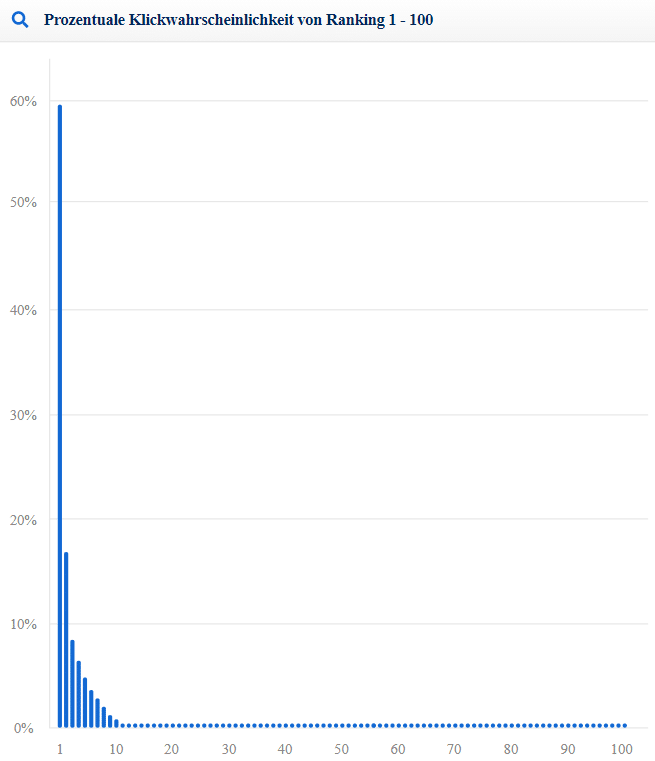
Companies and private website operators engage with SEO because they want to be found in relation to their subject matter. Preferably within the top 3 organic results. Most users never scroll further down. For businesses in Switzerland, especially SMEs in Zurich competing against both local rivals and large national brands, that top placement can make or break a lead pipeline. SEO therefore plays a central role for any website operator who takes growth seriously. They study Google’s ranking factors closely, because only those who understand the requirements can realistically compete. Businesses, associations and individual entrepreneurs adapt their websites accordingly. ONELINE, your analytical SEO agency, is happy to support you in search engine optimisation.
In recent years, a great deal has changed. Not just the information served, but the type of search itself. Voice search is one keyword here. It explains part of Google’s stickiness: super intuitive, zero friction. And yet critics exist who are willing to expose its weaknesses. Loudly.
Is Google letting its users down?
Wayback Machine is the tool that mercilessly documents the changes search results have undergone. Google now gives paid ads considerably more real estate than organic results. Worse, many search results lead straight back to Google’s own properties: Google Maps, YouTube, Google Shopping. The internet giant profits from this loop. More data, more ad impressions, more revenue. Critics do not deny that Google still produces useful results. The company’s teams include some of the most innovative minds in tech. Google implements well over 4,000 improvements and algorithm updates per year in 2026.
Camera search is one improvement users genuinely appreciate. But there is a pattern behind the changes: Google tends to bury optimal organic results when doing so pays off financially. Not unlike an insurance broker who recommends the product with the best commission rather than the best coverage.
Back in 2000, searching for something like “ladies trousers” delivered an unpaid result at the very top. By 2013 that unpaid result had already slipped. By 2020, users had to scroll considerably to find it. In 2026, between AI Overviews, shopping carousels and four or five paid ads, the first purely organic result can sit far below the fold.
Featured Snippets
Researchers studying search engine change have tracked how far below the search box the first meaningful result appears. In earlier years it sat around 375 pixels down. By 2020 that had grown to roughly 616 pixels. In 2026, with AI Overviews now appearing above Featured Snippets on many queries, that distance has grown further still. Google’s own line remains consistent: “We only run ads when we believe the user benefits.” But the pixel count tells a different story. The goal in 2004 was to route users away from Google and toward their actual destination. Since then, the strategy has inverted. Blue links still dominate volume, but Featured Snippets and AI-generated answers increasingly serve as the first organic position on the SERP, delivering direct responses without a click.
Google refers to itself and thus causes conflicts of interest
For many search queries, Google responds with YouTube videos or Google Maps results. On the surface, nothing wrong with that. But the financial incentive is real: ad revenue generated on Google’s own pages is estimated to be several times higher than revenue from ads appearing on third-party sites. That creates a structural conflict of interest. Users get nudged toward Google properties whether or not those properties offer the best answer.
The doctor search example illustrates this well. A practice with 300+ verified reviews on an independent platform may rank lower than a Google Business Profile with a fraction of that feedback. Patients logically trust higher review volumes. Google prioritises its own data. Experts describe this as “preferential search”. Google executives push back on that framing and maintain that the search engine delivers relevant, valuable results regardless. The debate is unresolved. What matters for Swiss companies is understanding that Google Ads and organic listings now coexist in an environment where neutrality is not guaranteed.
Conclusion
Google has transformed multiple times since its founding. Nowhere is that more visible than in search results. A large majority of users still favour it for its speed and convenience. The conflicts of interest and preferential search tendencies exist in the background, largely unnoticed by everyday users. Google functions as a fast-response advisor with near-infinite answers. That ads now fill a significant portion of the screen is accepted as the price of admission. The monopoly position is sustained by volume of data and continuous improvement of SEO measures. Voice search and AI Overviews stand as evidence that Google keeps expanding its answer formats.
For companies wanting to stay findable, adapting to Google’s evolving requirements is non-negotiable. Local SEO is a practical example. Any business in Switzerland that neglects its Google Business Profile, address details, opening hours and review management is simply handing ground to competitors. What we see in practice: Zurich SMEs that invest consistently in local SEO and lead generation outperform those that treat Google as a static channel. The search landscape shifts. The strategy has to shift with it.
This article was written by the ONELINE team. We have been supporting Swiss companies in digital transformation for over 10 years, from SEO and SEA to AI automation and lead generation.
Frequently Asked Questions
How much has Google’s search result page actually changed since 2000?
Significantly. In 2000, the first unpaid result appeared near the very top of the page. By 2026, a typical search result page can include an AI Overview, four or more paid ads, a shopping carousel and a Featured Snippet before any traditional organic blue link appears. For competitive queries, organic results can sit 700 pixels or more below the search box.
Does Google’s self-referencing really hurt users?
It depends on the query. For navigation or maps, Google’s own properties often give a good answer quickly. For product searches or professional services, preferential treatment of Google’s own pages can mean users miss better options. Our experience shows this is particularly relevant for Swiss users searching for local services in cities like Zurich or Zug.
What does Google’s evolution mean for SEO in Switzerland?
It means the rules keep changing. Ranking factors that worked in 2022 may be less relevant in 2026. AI Overviews, voice search and Featured Snippets reward content that answers questions clearly and completely. Swiss companies need an SEO partner who tracks these changes actively, not one who applies a fixed template year after year.
Is it still worth investing in organic SEO if Google prioritises ads?
Yes, absolutely. Paid ads stop the moment the budget runs out. Organic rankings, once established, deliver consistent traffic without per-click costs. For Swiss SMEs with limited marketing budgets, a well-executed SEO strategy often delivers a better long-term return than paid search alone. The two channels work best in combination.
{“@context”: “https://schema.org”, “@type”: “Article”, “headline”: “How has Google evolved over the years?”, “description”: “How has Google evolved over the years? Learn how search has changed and what it means for SEO in Switzerland. Updated for 2026.”, “author”: {“@type”: “Organization”, “name”: “ONELINE”, “url”: “https://oneline.ch”}, “publisher”: {“@type”: “Organization”, “name”: “ONELINE”, “logo”: {“@type”: “ImageObject”, “url”: “https://oneline.ch/logo.png”}}, “datePublished”: “2021-04-14”, “dateModified”: “2026-07-03”, “mainEntityOfPage”: {“@type”: “WebPage”, “@id”: “https://oneline.ch/en/blog/1254/”}}