Newsletter marketing is far from dead. In fact, in 2026 it remains one of the highest-ROI channels available to Swiss companies, with average email open rates hovering around 38,42% across B2B sectors, and click-through rates that consistently outperform organic social media reach. What we see in practice with clients in Zurich and Zug: companies that invest in structured newsletter strategies generate measurable leads at a fraction of the cost of paid channels. The channel is direct, owned and not subject to algorithm changes.
How does newsletter marketing work?
The way newsletter marketing works is simple: customers register to receive newsletters via a company’s website, its social media pages or even as part of an ordering process (opt-in). After registration, the email address is added to the company’s distribution list. Large providers or shops with a wide range of products even have several mailing lists in order to serve completely different target groups with suitable content and offers.
Appropriately prepared information is then regularly sent out to these distribution lists in newsletter format.
The different uses for newsletters
In newsletter marketing, it is absolutely important to define the specific purpose of each mailing. Which information is to be sent to which target group with which goal? Every planned newsletter content is then measured against this goal formulation. And only what fulfils the defined purpose is included in the final mailing.
Newsletter outreach is the appropriate tool for a variety of purposes:
• Advertising Newsletter
• New customer acquisition
• Existing customer care
• Brand loyalty
• Traffic increase
• Sale
Offer advantages for readers
Users sign up for newsletter offers because they expect personal benefits. After all, modern customers and interested parties want to be “remunerated”, so to speak, for voluntarily giving their e-mail address to a distribution list. Advantages can be, for example, exclusive discounts for newsletter readers or exclusive product access.
Another way is to offer readers added content value as an advantage. To do this, however, you have to manage to keep offering relevant topics and added value in your newsletters.
Generally speaking, a newsletter subscription can be seen as a much greater commitment on the part of the user than, for example, following an Instagram or Facebook channel. The company should honour this commitment with relevant content so that readers keep “staying tuned”.
Content and design in newsletter marketing
In terms of content, newsletters can be used for all topics that a company wants to communicate to its customers or other business contacts. This is not only about sales and advertising or information about the launch of new products. Advice and blog articles can also be the basis of newsletter content.
Also popular are internal company news as newsletter content: News about company events, new employees or new investments are exciting for many readers who do not reduce a company to pure products. To strengthen the connection to their own brand, companies should also prepare such content in newsletter style. In times of sustainability and fair trade, background information on production and quality assurance is also very much in demand.
Secret of success: added value
The success or failure of newsletter marketing stands or falls with the content: It is crucial to offer readers personally relevant content and, above all, added value. Depending on the target group, this can be help and tips on specialist topics, exclusive access to sales promotions or even company news. Swiss SMEs in particular, whether based in Zurich’s Kreis 5 or along the Zug tech corridor, benefit from newsletters that feel local and specific rather than generic.
Even the subject line must meet the reader’s needs: in just a few words, the sender should get to the heart of the benefits the reader will gain from opening and reading the email.
You can gather more information here.
Important topics for newsletter design are:
• Product news
• Sales promotions / Sales
• Events and promotions
• Company News / Network News
• Adviser & Tips
• Background information on production and company
In order to stay in contact with readers, the recommendation to companies for newsletter marketing is: a newsletter mail should be sent to the distribution list at least once a week. Offering added value and advantage content in it every time requires professional newsletter planning. This is indispensable. Because readers today very quickly unsubscribe from the mailing list if they find that a company’s mails have nothing personally relevant to offer them.
It is therefore always important to keep an eye on the target group and their needs, questions, wishes and areas of interest, and to align your own newsletter content with them. Pairing this with a solid lead generation strategy significantly amplifies results.
The importance of newsletter design
The design is decisive for the success of newsletter marketing: In order to pick up the reader at first sight with a newsletter and to arouse his interest, there are some design tips. For example, pictures with people have a much better effect than pure product photos. In order to be quickly identifiable for the reader, the company logo should always be at the beginning of the newsletter.
The design of the text modules should also be carefully considered: short teasers and several paragraphs instead of long text passages, links to further information highlighted in colour and boldface for keywords relevant to the target group are the be-all and end-all. Be careful with formatting and fonts: More than two different font sizes or a variety of different fonts can make the newsletter design chaotic and confusing.
ONELINE is happy to support you in creating suitable newsletter designs.
Tips for newsletter optimisation
From time to time it is worthwhile to revise and optimise your own newsletters. The basis for this is the analysis of past newsletter mailings: Opening and click rates are checked to determine which contents and offers work, and which do not.
Among the indispensable components of newsletter marketing are the call-to-action and the opt-out option. The latter must be mandatory, and should not be hidden somewhere in the small print. Because if customers have to search forever to unsubscribe, this does not exactly strengthen their brand affinity with the company. For those also investing in paid channels, combining newsletter efforts with Google Ads creates a powerful full-funnel approach.
Newsletter vs. social media: Which works better?
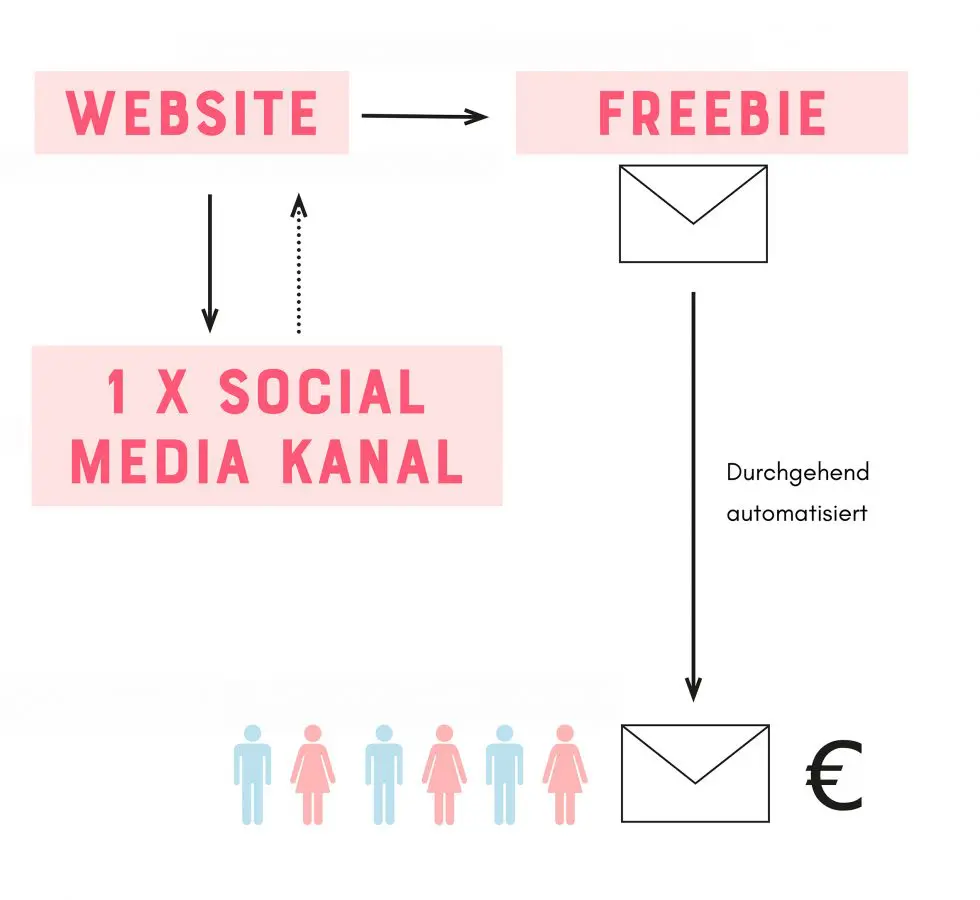
Newsletter marketing has an enormous advantage over posts in social media channels: as a sender, you don’t have to share the attention of users with many other info points. Whether it’s an Instagram story or a Facebook ad, there are countless potential distraction and jumping-off points around the positioning of your own messages on social media that lure users away.
When reading a newsletter, on the other hand, the sender has the reader’s full attention and concentration. This makes it possible to present even more complex products and topics. In addition, managing social media channels requires significantly more personal commitment and effort, while newsletter distribution and feedback channels can be increasingly automated through AI tools. Our experience shows that clients who pair smart automation with quality content see open rates climb quickly. AI-driven automation is making this easier than ever. ONELINE will be happy to inform you about the possibilities.
Frequently Asked Questions
How often should a company send out newsletters?
Our experience shows that once a week is a solid baseline for most Swiss SMEs. The key is consistency and relevance. Sending more frequently without strong content will accelerate unsubscribes fast.
Is newsletter marketing still effective in 2026?
Absolutely. Email remains one of the few owned channels where you control reach completely. With average open rates of 38,42% in Swiss B2B contexts, newsletters outperform organic social media by a wide margin.
What is the legal situation for newsletter marketing in Switzerland?
Switzerland operates under the revised Data Protection Act (revDSG), in force since September 2023. Opt-in is mandatory, and unsubscribe options must be clearly visible. When in doubt, consult a legal specialist familiar with Swiss data protection requirements.
How do I grow my newsletter subscriber list?
Combine lead magnets (exclusive content, discounts) with targeted landing pages and, if budget allows, paid traffic from Google Ads or social media. A coordinated approach between newsletter and lead generation almost always outperforms standalone tactics.
This article was written by the ONELINE team. We have been supporting Swiss companies in digital transformation for over 10 years, from SEO and SEA to AI automation and lead generation.
{“@context”: “https://schema.org”, “@type”: “Article”, “headline”: “Newsletters are not obsolete: They are an important tool for success”, “description”: “Newsletter Marketing in 2026: Why newsletters remain one of the most powerful tools for Swiss SMEs — and how to use them effectively.”, “author”: {“@type”: “Organization”, “name”: “ONELINE”, “url”: “https://oneline.ch”}, “publisher”: {“@type”: “Organization”, “name”: “ONELINE”, “logo”: {“@type”: “ImageObject”, “url”: “https://oneline.ch/logo.png”}}, “datePublished”: “2022-08-19”, “dateModified”: “2026-07-16”, “mainEntityOfPage”: {“@type”: “WebPage”, “@id”: “https://oneline.ch/en/blog/2487/”}}