Affiliate marketing remains one of the most cost-efficient channels for Swiss companies in 2026, especially for e-commerce businesses in Zurich and Zug looking to scale without blowing their paid media budget. The core principle is simple: you only pay when something happens. A sale, a click, a lead. No action, no invoice. But getting affiliate marketing right takes more than signing up to a network and hoping for the best. In order to find out whether affiliate measures are worthwhile for your company, start by asking yourself the right questions:
Is Affiliate Marketing Right for You?
- Does the company achieve enough margin through the sales prices to be able to pay commissions to partners?
- Are there websites on the Internet that match the company’s product?
- Do companies send out newsletters with editorial topics?
- Do new newsletter subscribers increase the company’s success?
- Does the competition already use affiliate measures?
- Is there an evaluation of your own products and services on the internet?
- Do blogs exist that fit thematically with the company’s performance?
- What is the value of a click, a subscriber or a sale?
- Do users search for the respective company product online? If so, do they buy it?
The Secret of Affiliate Measures
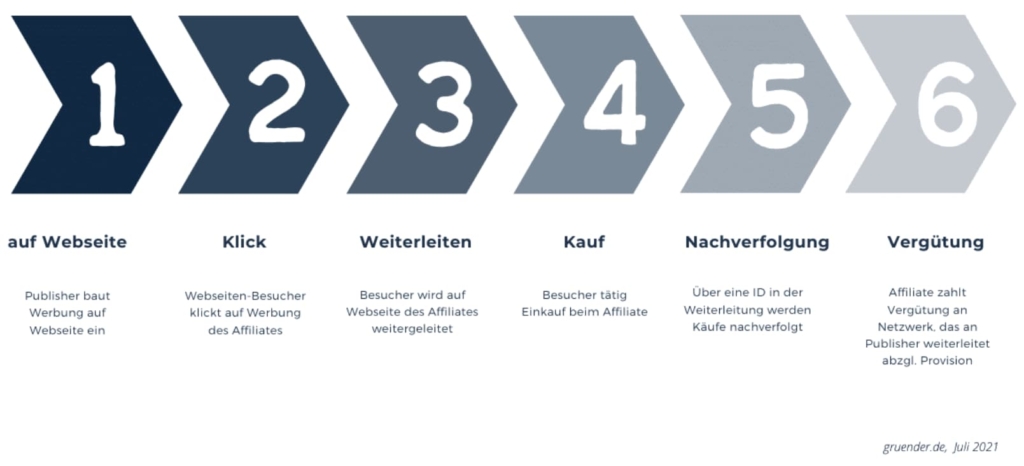
Companies provide their affiliate partners with advertising material, which they present on their online sites. However, only activities that trigger an action, such as a purchase or a click, on the respective company platform count. Thus, the different remuneration models act as an incentive for potential platforms to act as affiliate partners. So what is the secret of this type of advertising?
The saying: “If you want to go fast, go alone. If you want to go far, go together” aptly describes affiliate measures. Affiliate marketing results in a win-win situation for all parties involved. Those who promote the product receive a commission. Companies, in turn, increase the number of their customers. On their own, however, neither the company nor the advertising partner achieves this success.
They achieve much more with a cooperation. Therein lies the success of this type of advertising measure. Moreover, it is possible to earn money with affiliate marketing.
With each other instead of against each other. Competitive thinking appears less lucrative in a direct comparison with cooperation, at least in relation to affiliate measures. However, since affiliate measures are only successful if companies implement them efficiently, the online marketing agency ONELINE explains how to use them sensibly. Our experience from working with Swiss SMEs shows that companies in Zurich and the Zug economic region in particular benefit enormously from well-structured affiliate programmes, as the local e-commerce market continues to grow strongly in 2026.
One thing first: the affiliate business is not suitable for everyone. Medical practices as well as hospitals refrain from acquiring their patients via affiliates for good reasons. While companies that offer physical products benefit from affiliate cooperation, the situation is different for service companies with regard to affiliate programmes. Medical practices or law firms do not use affiliate cooperation. Why? Because people still have a low willingness to pay for services. They prefer tangible products.
The Top 7 Tips for Successful Implementation
1. Choose the Right Type of Affiliate
It lays the building block for the success of the advertising measures. Companies can choose one or more measures from the following points.
- Test and comparison portals
- Niche sites
- Theme portals
- Voucher portals
- Product tests on YouTube
- Cashback portals
- Trade blogs and online magazines
- E-Mail Affiliates
- Social Media Affiliates
2. Use Mobile First
In the digital world, nothing works without mobile-first indexing. Consequently, successful affiliate marketing is by no means spared from mobile first. As of 2026, well over 65% of affiliate traffic in Switzerland takes place via mobile devices. A slow or poorly optimised mobile experience kills conversions before they even start. If your landing pages are not mobile-ready, reconsider the whole setup first. Our colleagues in web development can help get this right.
3. Respect and Cooperation at Eye Level
Good communication accompanied by respect still enjoys a low status in many affiliate programmes. An open conversation is the key to success.
Affiliates prefer to have a contact person who can help and advise them with questions. That is why programme descriptions, newsletters and affiliate programme search engines contain contact details for the contact person.
Many companies make a fatal mistake: they do not inform their affiliates about changes to the respective programme or about shop renewals. Why is this mistake fatal? Because a URL change leads a link to nowhere. This increases the bounce rate. Sales logically fail to materialise. This is why successful communication takes place at eye level. Because affiliates also provide useful information. They know what the competition does better. They can also tell you which measures are necessary to improve the success of a shop.
4. Focus on the Customer Journey
Customer journey tracking is also a central aspect of affiliate marketing. This is because it uncovers important touchpoints.
A customer journey reveals the path of a buyer from first contact to purchase. Therefore, the precise analysis of this process enables good planning of the marketing budget.
In addition, companies that take the customer journey seriously can reward their high-value affiliates fairly. This connects naturally with lead generation strategy, where understanding each touchpoint is equally critical.
5. Choose Appropriate Remuneration
Remuneration serves as an important incentive for an affiliate partnership. Therefore, companies should know the differences.
In this way, they can fairly remunerate their partners for the cooperation. In practice, various remuneration models exist with regard to affiliate advertising measures. The affiliates’ commission serves as the basis for calculation.
- Pay-per-Lead (A registration of the customer or the download of a product serve as the basis for a commission)
- Pay-per-Click (For each click of a user on the respective advertising material, the partners receive a commission)
- Pay-per-Sale (Partners receive a commission as a percentage of sales)
6. Choose a Partner Wisely
Companies should check their partners. That is why it pays to take a close look at their website.
The online presence should not contain anything suspicious.
Furthermore, the content should fit the company’s activities.
In addition, it is worth checking the social networks of the affiliates. The number of followers plays an important role in the affiliate business, though engagement rate and audience relevance matter far more than raw follower counts in 2026.
7. Ensure Proper Tracking
Even though the basis of affiliate business is based on tracking users’ various online activities, users’ concerns about their data protection and privacy are increasing.
Cookie lifetimes are shrinking, third-party cookies are largely gone, and Swiss data protection requirements under the revised nDSG add another layer of complexity. Server-side tracking solutions have become the standard answer here. What we see in practice: companies that invested in robust first-party tracking setups in 2025 are now reaping the rewards with far more reliable attribution data. Cookie consent management is no longer optional. It is the foundation everything else is built on.
Advantages of a Successful Implementation
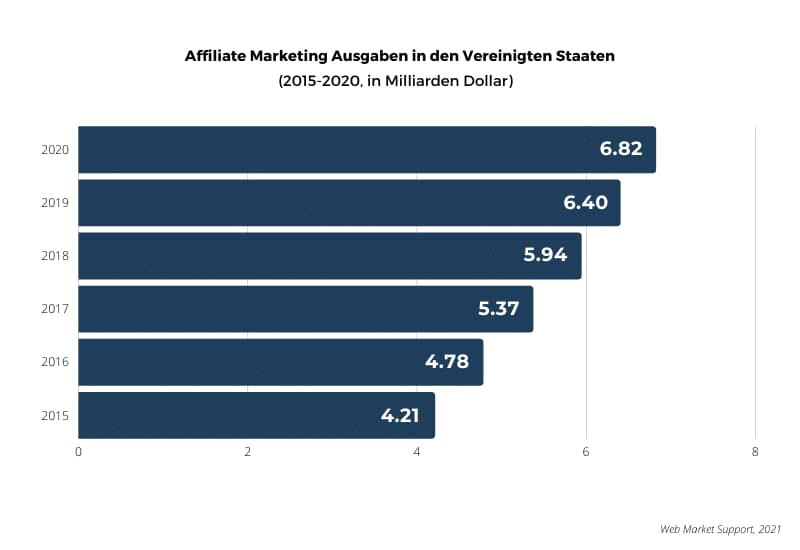
A successful implementation of affiliate marketing implies a cost saving.
After all, companies only reward their partners when users have taken an action.
Pay advertising costs in advance? Not with affiliate measures.
Furthermore, the integration of the advertising banners on the online presences does not require any technical knowledge.
In addition, setting up the partner programmes is uncomplicated.
And last, but not least: an increase in turnover.
Disadvantages Arising from Affiliate Marketing
At this point, ONELINE also points out the disadvantages that result from the affiliate business.
Risks and challenges always exist.
Which are? The outcome of affiliate activities is unpredictable. The reason for this is that numerous affiliates are eager to generate traffic for many companies on an irregular basis.
On top of that, companies are finding out why they are generating hardly any leads, clicks or sales: because their partners are not marketing their products to the right target group.
This results in a low conversion rate and a high bounce rate on the respective online presence.
The establishment of an attractive affiliate programme is an important basis for the success of affiliate marketing. This can reduce disadvantages. Combining affiliate efforts with a solid SEO strategy and targeted Google Ads campaigns creates a much more resilient overall acquisition setup.
Tips for a Successful Affiliate Strategy
With affiliate measures, the strategy also plays a decisive role. However, in order to find a suitable variant, companies should first define their goals.
Possible targets are:
- Attract qualified visitors
- Achieve more sales
- Attracting newsletter subscribers
- Contact requests
- App installation
- Software download
- Whitepaper download
- Use of freemium offers
- Opening a test account
Companies should therefore think about their goals before entering the affiliate business.
In order to also minimise the risk of disadvantages arising, ONELINE recommends going through the following short checklist of success factors:
Success Factors for Affiliate Marketing
1. Choice of an attractive partner programme
2. Find suitable partners
3. Pay attention to the type of integration
The type of integration plays an important role. Because with the banner, readers recognise that it is advertising.
Links in the text, on the other hand, are discreet and just as effective.
This article was written by the ONELINE team. We have been supporting Swiss companies in digital transformation for over 10 years, from SEO and SEA to AI automation and lead generation.
Frequently Asked Questions
What commission rates are realistic for Swiss affiliate programmes in 2026?
It depends heavily on the product category and margin. For physical products, commissions between 3% and 10% are common. Digital products or software often go higher, sometimes 20% to 30%. What matters most is that the rate is competitive enough to attract quality partners while still being profitable for you.
How long does it take before affiliate marketing delivers measurable results?
Realistically, plan for 3 to 6 months before you see consistent results. Building a network of good partners, testing creatives and optimising landing pages takes time. Companies that expect overnight success usually abandon the channel too early.
Is affiliate marketing suitable for B2B companies in Switzerland?
It can work, but the approach is different. B2B affiliates are typically industry publications, consultants or niche newsletter operators rather than coupon sites. The volumes are lower but the lead quality can be excellent. Combine it with a strong lead generation strategy for best results.
How does Swiss data protection law affect affiliate tracking?
Since the revised nDSG came into force, Swiss companies must handle user data carefully. This means proper cookie consent, transparent data usage disclosures and, increasingly, server-side tracking setups that reduce reliance on third-party cookies. Ignoring this is not just a legal risk, it also distorts your attribution data.
{“@context”: “https://schema.org”, “@type”: “Article”, “headline”: “How to implement affiliate marketing successfully”, “description”: “Affiliate Marketing: How to implement it successfully in 2026. Tips, remuneration models and success factors for Swiss companies. Learn more now.”, “author”: {“@type”: “Organization”, “name”: “ONELINE”, “url”: “https://oneline.ch”}, “publisher”: {“@type”: “Organization”, “name”: “ONELINE”, “logo”: {“@type”: “ImageObject”, “url”: “https://oneline.ch/logo.png”}}, “datePublished”: “2021-07-09”, “dateModified”: “2026-07-06”, “mainEntityOfPage”: {“@type”: “WebPage”, “@id”: “https://oneline.ch/en/blog/2417/”}}